Journal / Attention
The real cost of switching tabs
Switching is cheap in the moment and expensive in aggregate, which is exactly the shape of a habit nobody notices forming.

In short
- A switch is an unload and a reload, not a pause.
- Self-interruption is roughly half the problem — add friction.
- Count switches on paper for a week; counting alone reduces them.
What a switch actually does
Moving from writing to a chat window and back is not a pause; it is an unload and a reload. The context you were holding — the half-formed argument, the variable you were tracking — has to be rebuilt, and rebuilding is slower than holding.
Worse, some of the previous context bleeds into the new task. That is why a quick glance at a message can leave you re-reading the same paragraph three times: part of your attention is still resolving the message you decided not to answer.
Self-interruption is the bigger half
External interruptions get the blame, but observation studies of office work keep finding that people interrupt themselves nearly as often as anyone else interrupts them — a lull, a stuck sentence, and the hand moves to the other tab without a decision being made.
Which is good news. Self-interruption responds to friction. Closing the tab rather than minimising it, logging out of the account you drift to, leaving the phone in another room: none of these are heroic, and all of them convert an automatic movement into a small deliberate one.
Batching without pretending to be a monk
Rather than aiming for zero switches, aim for scheduled ones. Three inbox windows a day, chat checked on the hour, notifications off in between. The total time spent on messages barely changes; the number of reloads collapses.
Tell people the schedule. Most of the anxiety about batching is imagined on your side — colleagues generally do not mind a two-hour reply if they know it is coming and know how to reach you if something is genuinely on fire.
A one-week measurement
For five days, put a tally mark on paper every time you switch away from the main task before finishing a unit of it. Paper, not an app, because the app is a tab.
The number is usually startling in the first two days and drops in the last three purely because you are counting. That drop is the finding: much of the switching was never a decision, and observation alone removes a good part of it. Whatever is left after the week is the part worth designing around.
Notifications are a policy, not a setting
Turning notifications off for an afternoon is a mood; deciding which three things may interrupt you and silencing everything else is a policy. The difference shows up in week three, when the mood has faded and the policy is still running.
Write it down in one line — calls from the on-call rota, messages from the two people on the current project, nothing else. A written line survives the moment of weakness at four in the afternoon when a badge appears and the hand moves on its own.
Expect to renegotiate it every few months as projects change. Policies that never change get ignored; the useful ones are short, current, and known by the handful of colleagues who might genuinely need to break through.
The messaging app is a different animal
Email arrives in discrete batches and can be reasonably ignored for two hours. Group chat is continuous and socially loaded: silence looks like absence, and the scroll-back punishes you for having been away by making you read forty messages to find the two that mattered.
Two adjustments make the difference. Mute everything except direct mentions and the two or three channels tied to current work, and give yourself permission not to read the backlog — if something needed you, it will have your name on it.
The second adjustment is social rather than technical. Say once, in the channel, that you check between blocks and that anything urgent should be a call. People adapt to stated availability far more easily than they adapt to unpredictable availability, and the stated version removes the low-grade guilt that makes people check compulsively.
Restarting well
Since some switching is unavoidable, the useful skill is a cheap restart. Before answering anything, write one line: the sentence you were about to write, the value you were tracking, the question you were about to test.
This is the same re-entry line that works after interruptions in a shared room, and it matters most for work that is held in the head rather than on the screen — an argument half-formed, a bug half-narrowed. The line takes ten seconds and replaces the two or three minutes normally spent reconstructing it, plus the risk of reconstructing it slightly wrong.
Over a day with six interruptions the arithmetic is unremarkable and the effect is not: the work stays continuous even though the attention was not, and the day ends with something finished rather than several things in flight.
The Thursday letter
One short piece a week — usually a method someone on the desk tried and either kept or dropped. No attachments, no course, no schedule creep.
Also on the desk

The shutdown note: five lines that stop work following you home
Routines
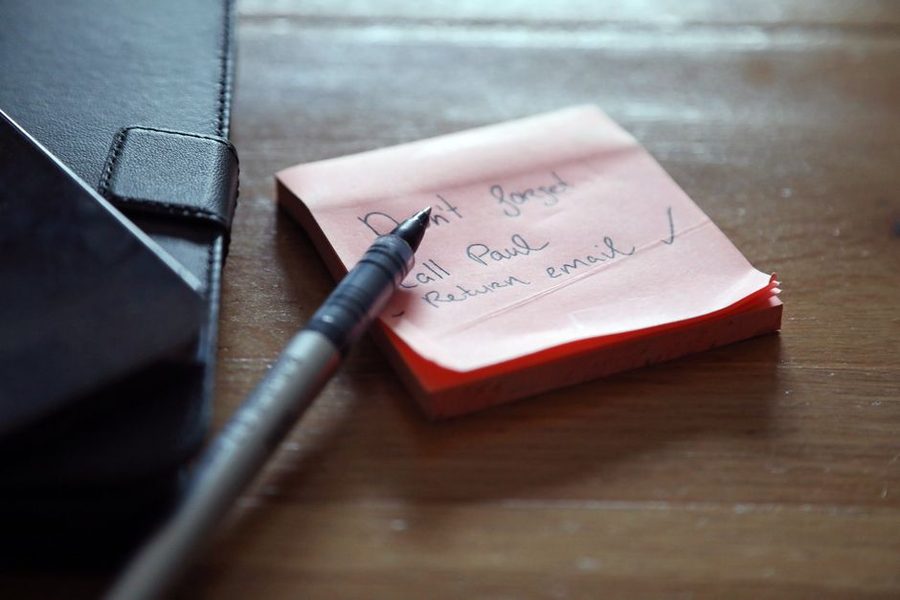
Task lists that survive Tuesday
Planning

Meetings that earn their slot
Working hours