Journal / Planning
Planning a week in thirty minutes
A weekly plan is not a schedule. It is a short argument with yourself about what the week is for, and it takes half an hour.
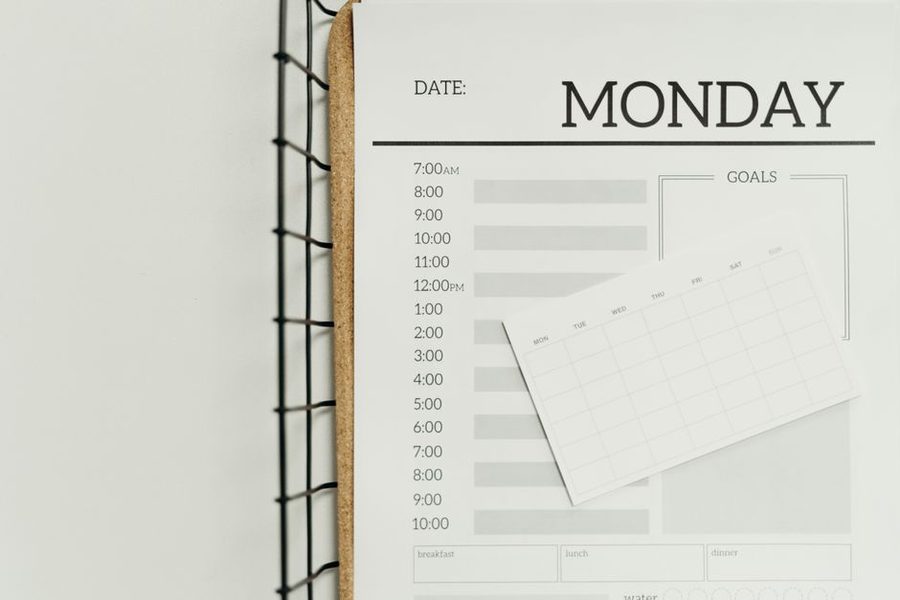
In short
- Same slot every week; thirty minutes, four passes.
- Count the genuinely open half-days before committing.
- Leave a fifth of the week unallocated and check on Wednesday.
Pick the time and protect it
Friday afternoon or Monday morning both work; alternating between them does not. The value comes from the plan existing at a predictable moment, so that during the week you can defer decisions to it instead of relitigating them daily.
Thirty minutes is enough. Ninety minutes of planning is a symptom — usually of an unresolved decision that the planning session is being used to avoid.
Four passes
Look back first: what actually happened last week versus what was written down? Two minutes, no self-criticism, just the gap. The gap is data about your estimates, not about your character.
Then the calendar: where are the fixed blocks, and how many genuinely open half-days remain? Most people discover they have two, not five, and every over-ambitious week starts by not looking.
Then the commitments: what did you promise someone, with a date? These outrank your own projects because breaking them costs other people time.
Finally, one advancing goal — the single thing that, if it moves, makes the week worthwhile. Write it where you will see it on Wednesday, which is the day plans quietly die.
Leave a fifth of the week empty
Fill four days out of five and leave the rest unallocated. Something will arrive; it always does. A plan with slack absorbs it and stays true, while a plan booked to the edge is wrong by Tuesday and abandoned by Thursday.
The empty fifth is not idle time. It is the buffer that makes the other four days believable — and on the rare week when nothing goes wrong, it is when the neglected, non-urgent work finally gets touched.
Wednesday check
Two minutes midweek: is the advancing goal moving? If not, the rest of the week gets rearranged now, while there is still week left. The check is short by design — its job is to catch drift, not to redo the plan.
Weeks that fail usually fail on Wednesday and are only noticed on Friday. Moving the discovery forward by two days is most of the benefit of planning at all.
Planning for a team is a different job
A personal plan can be optimistic and only you pay for it. A team plan that is optimistic makes four other people wrong at the same time, which is why shared plans need slack in the schedule rather than in the estimates.
The practical version: agree what the week is for in one sentence, publish who owns each commitment with a date, and leave one day a week with nothing scheduled across the whole team. That empty day absorbs the incident, the sick colleague and the client who moves a deadline — all of which arrive on schedule every month.
Review it in fifteen minutes at the same hour each week, with the previous sheet on the table. Teams that skip the look-back keep re-committing to the same impossible shape and slowly stop believing their own plans, which is a harder problem to fix than a missed deadline.
Estimates are wrong in a predictable direction
Almost everyone underestimates, and the underestimate has a shape: we plan for the task and forget the surrounding work — the setting up, the reviewing, the waiting for someone else, the second pass after feedback.
The cheap correction is to plan from history rather than from imagination. If similar work took three days the last two times, plan three days, regardless of the argument that this time will be smoother. It is never smoother, and the argument is the same one you made last time.
Keeping the old weekly sheets makes this possible. Four sheets in a drawer are a better estimating tool than any technique, because they are evidence about you rather than advice about people in general.
Protecting the plan from other people
A plan meets its first challenge on Tuesday morning when a colleague asks for something that will take a day. Refusing outright is rarely right — the request may matter more than what you had planned — but accepting silently destroys the week.
The workable answer names the trade: "I can do that, and it means the report slips to Friday — is that the right call?" The question moves the decision to the person who owns the priority, which is where it belongs, and it is a far easier sentence to say than no.
Roughly half the time the answer comes back that it can wait until next week, which is the outcome the parking box exists for. The other half of the time you have made a deliberate swap instead of an accidental one, and the plan survives because it was changed rather than ignored.
The Thursday letter
One short piece a week — usually a method someone on the desk tried and either kept or dropped. No attachments, no course, no schedule creep.
Also on the desk

Task lists that survive Tuesday
Planning

Meetings that earn their slot
Working hours

The real cost of switching tabs
Attention